AppHuntUse apps for free.
Paid apps & subscriptions, free with promo codes.See offers

Lux and exposure meter for iPhone and iPad

The light meter you already carry.

Pupila turns your iPhone camera into a light meter. See how bright a room or a desk is in lux, get the f-stop and shutter speed for film or digital, check whether a spot suits your plant, read the color temperature of a lamp and plan your golden hour. No account, no ads.

Coming soon on the App Store

Coming soon · Free to download, optional Pupila Premium

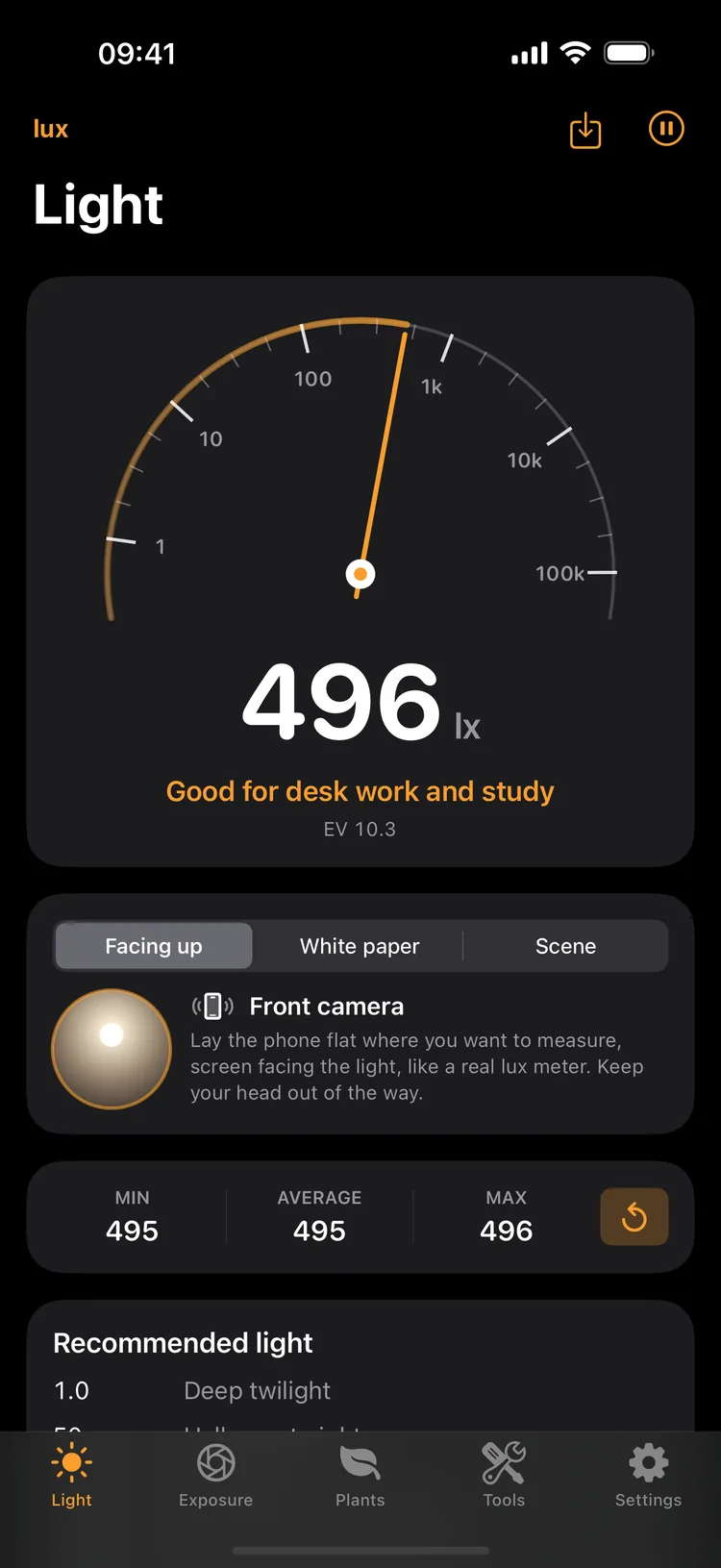
Pupila measuring 496 lux on a needle gauge, Good for desk work and study, EV 10.3, with the phone lying facing up; minimum 495, average 495, maximum 496
  • Lux or foot-candles
  • Three ways to measure
  • Spot metering
  • Full, half or third stops
  • Calibrate against a lux meter
  • 32 languages

Lux is only the start

Pupila tells a photographer what to set on the camera, a plant owner whether a spot is bright enough, and anyone choosing bulbs how warm or cool a lamp is.

Exposure meter

The f-stop and shutter speed to set

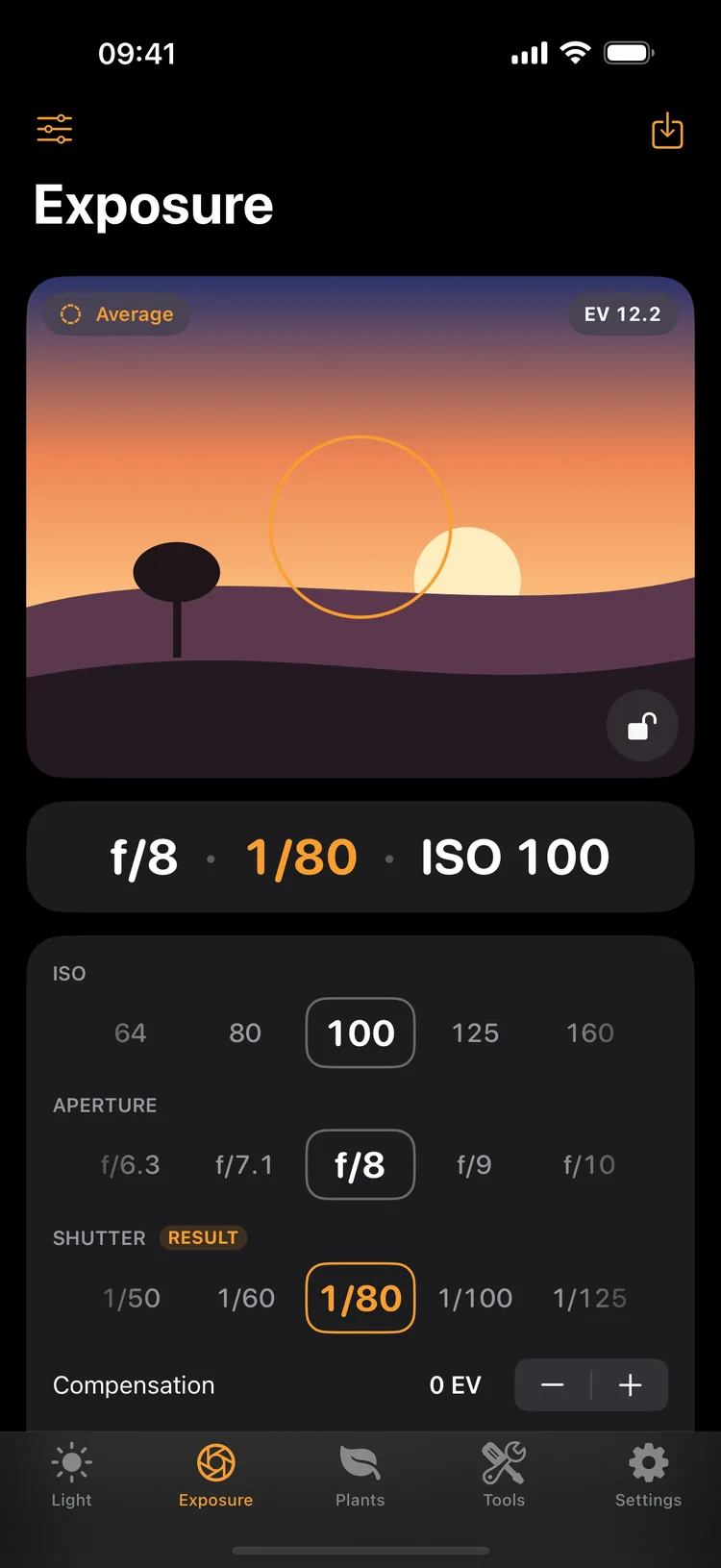
Set your ISO or film speed, pick the aperture and Pupila gives you the shutter speed, or drag the shutter dial and it works out the aperture. Camera-style dials step in full, half or third stops. Tap the viewfinder to spot meter, lock the reading while you set your camera, and dial in up to ±3 EV of compensation.

The exposure meter at f/8, 1/80 and ISO 100 (EV 12.2) for a sunset scene, with ISO, aperture and shutter dials in third stops and compensation at 0 EV

Plant light · Premium

Is this spot bright enough for your plant?

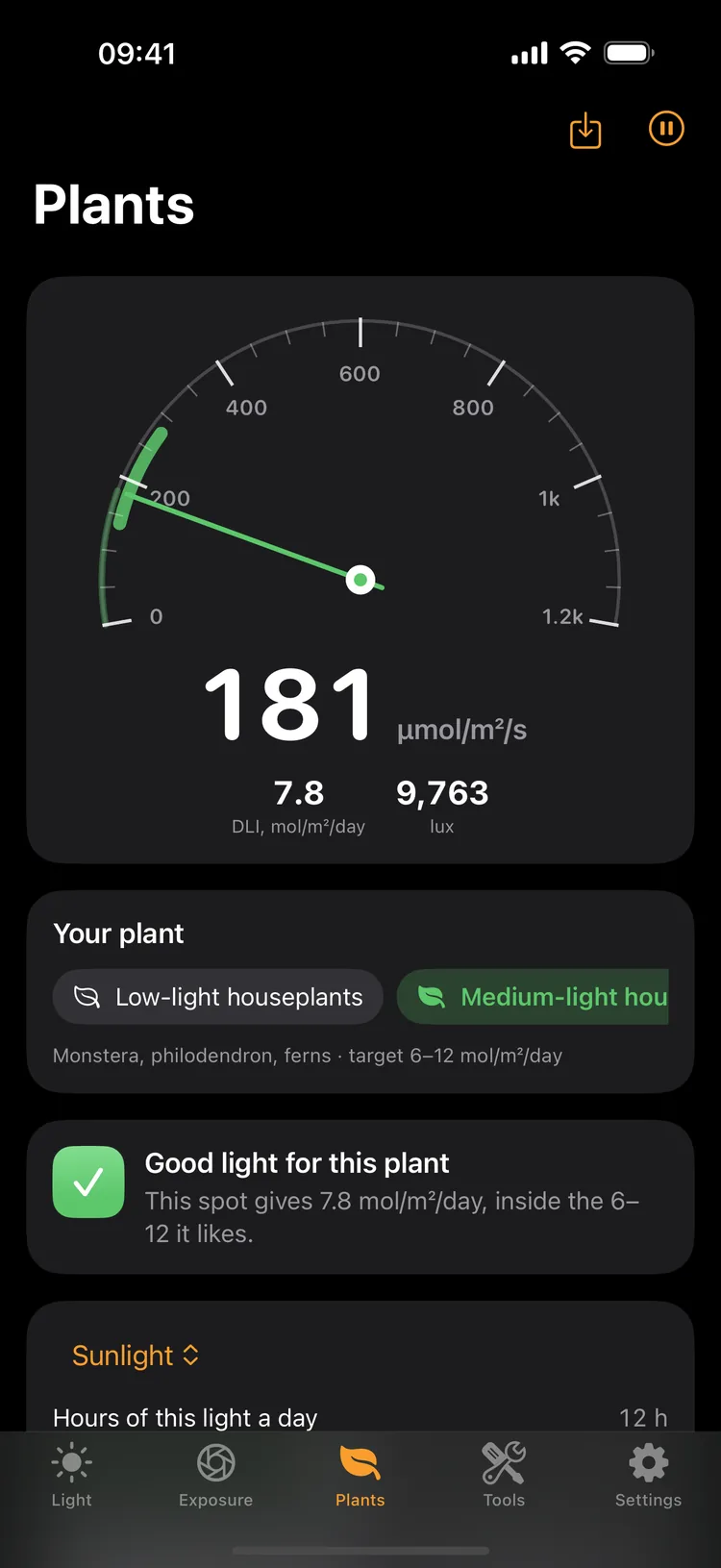
Hold the phone at leaf height, pick the light (sunlight, white or grow LEDs, fluorescent, sodium, metal halide or incandescent) and your kind of plant, from snake plants to tomatoes. Pupila turns lux into PPFD, adds up the day as DLI for the hours you set, and tells you whether the spot is too dark, just right or too bright, and how many hours of light the plant needs.

Plant light of 181 µmol/m²/s and a DLI of 7.8 mol/m²/day from 9,763 lux of sunlight: good light for medium-light houseplants such as monstera, which want 6–12 mol/m²/day

Color temperature

Kelvin, tint and the gel to match

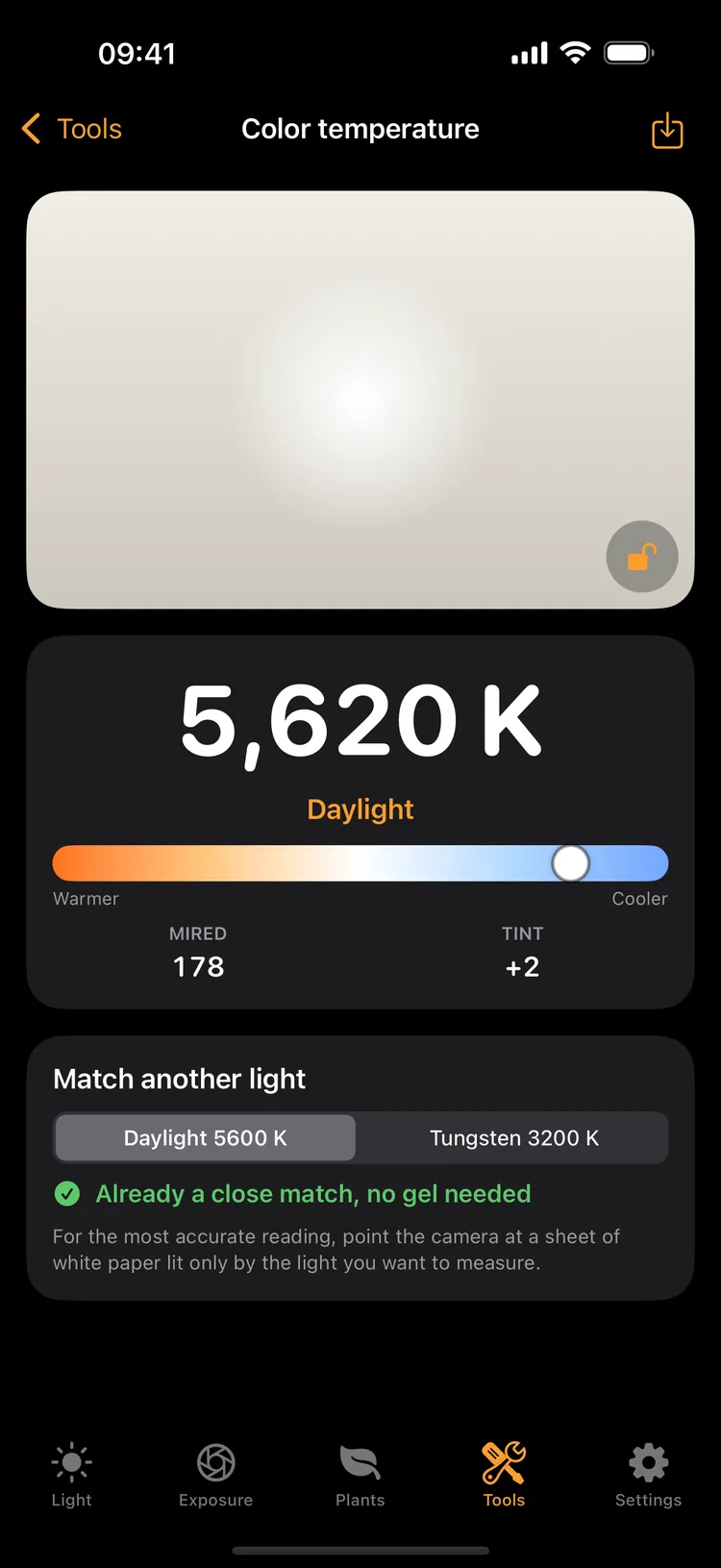
Point the camera at a sheet of white paper lit only by the light you want to measure. Pupila reads the camera's white balance, shows the color temperature in Kelvin with tint and mired, names the kind of light from candle to blue-sky shade, and suggests the CTO or CTB gel that brings it to daylight or tungsten.

Color temperature of 5,620 K, Daylight, with mired 178 and tint +2; compared with 5600 K daylight it is already a close match and needs no gel

Beyond lux and f-stops

Flicker test · Premium

Does that LED pulse?

Point the camera at a lamp or screen, or a white wall lit only by it. Pupila measures how much the light pulses as a percentage you can compare; under about 4 % is considered free of visible effects.

Film tools · Premium

ND filters and long exposures

ND2 to ND32000 added to the exposure, and the maker's reciprocity correction for 14 black-and-white films from Ilford, Kentmere, Kodak and Fujifilm.

Calibration

Match a real lux meter

Measure the same spot with both and enter the meter's value. The front and back cameras keep their own offsets, and the meters use them automatically.

Private

Nothing is saved or sent

The camera image is analysed in memory and discarded. No photos, no account, no ads, no tracking.

Free to measure. Premium for the rest.

Pupila is free to download, with no ads and no account. Pupila Premium is $2.99 a week or $19.99 a year with a 3-day free trial, $4.99 a month, or $29.99 once for life. Prices are in US dollars.

Free

Measure light and exposure

The light meter in lux or foot-candles with all three methods, the exposure meter with spot metering, color temperature, golden hour, calibration and the widgets, with no limits.

Pupila Premium

Plants, flicker, film and saved readings

Plant light with PPFD and DLI, the flicker test, film tools with ND filters and long-exposure corrections for 14 films, and saved readings you can export as a CSV file.

Questions about Pupila

How accurate is a phone light meter?

Phone cameras aren't calibrated instruments, so every reading is an estimate worked out from the camera's own exposure. The White paper method is the most reliable, and you can calibrate Pupila against a lux meter in Tools → Calibration. Pupila isn't a certified instrument: use a certified meter where the law or a contract requires one.

Does Pupila save photos?

No. It reads brightness and white balance from the live camera image and keeps nothing: no photos, no video, no account, no ads, no tracking.

Why does Golden hour ask for my location?

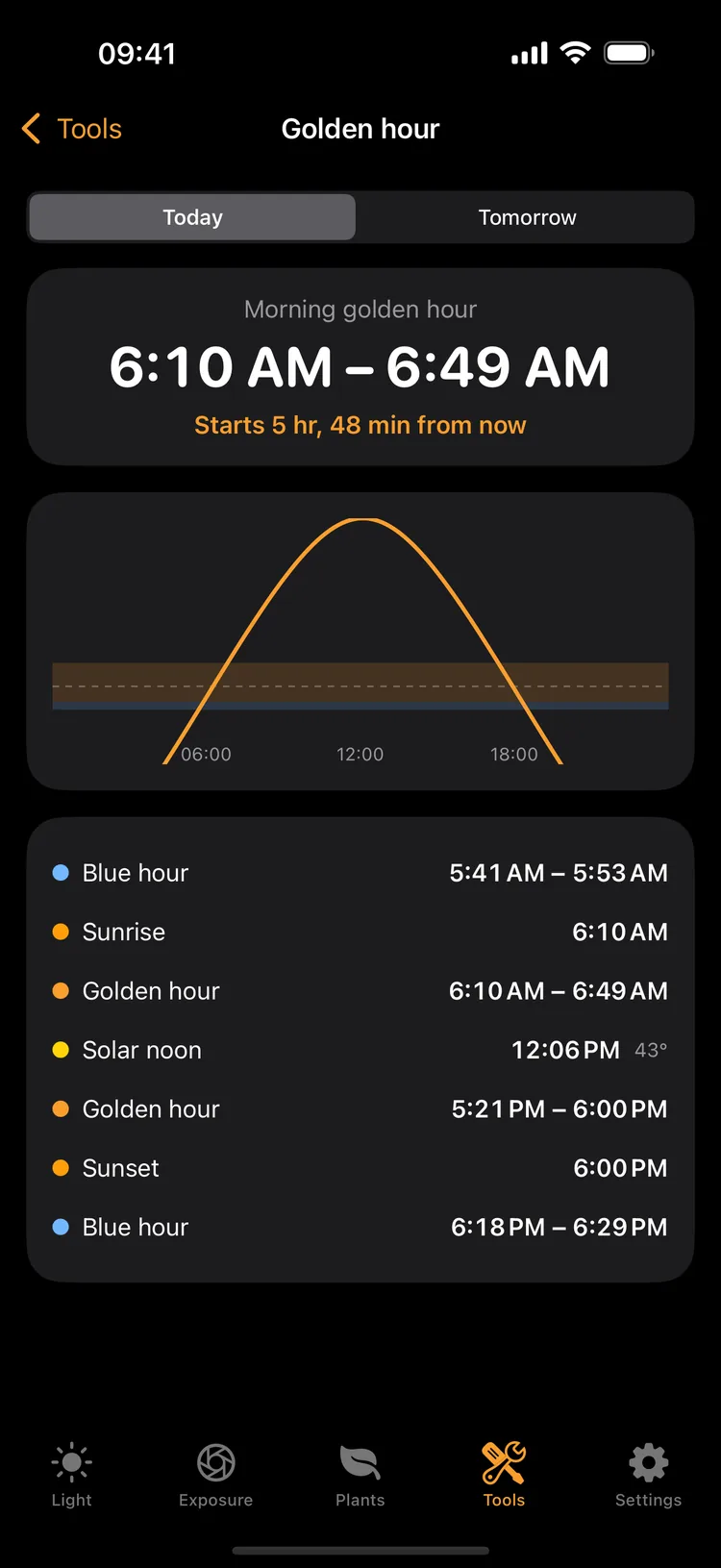
Sun times depend on where you are. Pupila uses your approximate location on the device only when you open Golden hour or use its widget, and never sends it anywhere.

Can I use it for film cameras?

Yes. Set the film speed as ISO, pick aperture or shutter priority, and Pupila gives you the other value. With Pupila Premium it also applies the film maker's reciprocity correction to long exposures, for 14 black-and-white films.

Can it tell whether my plant gets enough light?

Yes, with Pupila Premium. Pick the light source and your kind of plant, and Pupila converts lux to PPFD with typical factors, adds up the day as DLI and says whether the spot is too dark, right or too bright. Purple red-and-blue grow lights can't be measured reliably with a camera; use the numbers from the lamp's maker instead.

Is Pupila free?

Yes. The light meter, the exposure meter with spot metering, color temperature and golden hour are free with no limits. Pupila Premium adds plant light, the flicker test, film tools and saved readings with CSV export.
Light, in numbers you can use.

Pupila for iPhone and iPad. Free to download, with Pupila Premium for plants, flicker, film and saved readings.

Coming soon on the App Store